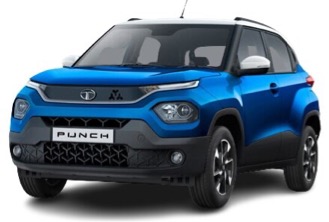
In an increasingly competitive automotive landscape, ownership economics have become just as important as styling and features. Buyers in the entry and mid-entry segments often evaluate not only purchase price but also long-term running costs, fuel efficiency, maintenance requirements, and resale stability. The Tata Punch, positioned within the micro-SUV category, presents an interesting case study in how compact SUVs can balance aspirational appeal with practical affordability.
Understanding the economics of owning a micro-SUV requires examining multiple cost layers rather than focusing solely on initial pricing.
Fuel Efficiency and Everyday Running Costs
Fuel efficiency remains a primary determinant of ownership cost. The Tata Punch offers a 1.2L Revotron petrol engine producing 87.8 PS and 115 Nm torque. This engine is tuned to prioritise everyday usability and fuel-conscious driving within urban environments.
For buyers seeking lower fuel expenditure, the Punch also offers a 1.2L iCNG option producing 73.4 PS and 103 Nm torque. The introduction of India’s first CNG AMT SUV further expands cost-saving opportunities, particularly in cities with well-developed CNG infrastructure.
By offering petrol, CNG, and AMT configurations, the Punch supports flexible fuel budgeting, which is critical for first-time buyers and urban commuters.
Compact Size, Lower Operating Burden
At 3,876 mm in length, the Punch retains the compact footprint typical of hatchbacks. This compactness contributes indirectly to lower operating expenses. Smaller vehicles generally incur:
- Reduced tyre replacement costs
- Lower insurance premiums
- Easier manoeuvrability reduces wear and tear
The Punch’s sub-4-metre classification provides tax advantages under Indian regulations, keeping acquisition and registration costs manageable compared to those of larger SUVs
Thus, while it offers SUV identity, it retains the economic advantages of compact vehicles.
Maintenance Simplicity and Mechanical Reliability
Ownership economics also depend on mechanical reliability and servicing predictability. The Punch’s naturally aspirated 1.2L petrol engine architecture prioritises simplicity over turbocharged complexity in its standard configuration.
This mechanical straightforwardness can translate into predictable service cycles and accessible maintenance.
Additionally, Tata’s established service network supports the availability of parts and standardised servicing practices, both of which are significant factors in long-term cost planning.
Predictable servicing reduces financial uncertainty, which is a central concern for micro-SUV buyers.
Safety as Long-Term Value
While safety systems may not directly reduce fuel costs, they contribute to long-term ownership value. The Punch is positioned as India’s Safest 5-Star Rated Sub Compact SUV and incorporates:
- 6 Airbags
- Electronic Stability Program (ESP)
- Hill Hold Assist and Hill Descent Control
Enhanced safety reduces risk exposure and can positively influence insurance premiums and resale value. Buyers increasingly evaluate safety as part of economic planning rather than as a secondary feature.
Boot Capacity and Practical Utility
The Punch offers 366 litres of boot space (ISO V215 standard) in petrol variants. Efficient boot packaging ensures buyers do not need to upgrade to larger vehicles prematurely for moderate cargo needs.
The iCNG’s twin-cylinder placement beneath the luggage area preserves usable space, reinforcing its practicality.
Efficient space utilisation reduces the economic need for larger, more expensive SUVs.
Technology Without Excessive Cost Inflation
Modern buyers expect infotainment and digital features, but excessive technological layering can raise maintenance and repair costs. The Punch integrates:
- Ultra View 26.03 cm HD infotainment with Wireless Android Auto and Apple CarPlay
- Ultra View 17.78 cm Digital Cluster
- Voice-Assisted Electric Sunroof
These features enhance daily experience without pushing the vehicle into a high-cost premium bracket.
Research-Led Financial Decisions
Today’s buyers increasingly analyse cost implications before committing. On platforms such as ACKO Drive, where variants, fuel types, and safety features can be compared before booking online, micro-SUV buyers often evaluate whether higher trims justify the incremental cost.
Structured comparison allows buyers to align feature selection with long-term economic planning.
Conclusion
The Tata Punch demonstrates how a micro-SUV can balance aspirational SUV styling with disciplined ownership economics. Through fuel-efficient petrol and CNG options, compact dimensions, strong safety credentials, and practical technology integration, it addresses both emotional and financial considerations.
In the micro-SUV segment, economics extend beyond price tags. They encompass fuel savings, maintenance predictability, resale value, and safety investment. The Punch’s positioning reflects a conscious attempt to combine SUV confidence with manageable long-term ownership costs.